My Fiction: Stories & Novels
- 3.4
- Rating
- 1.00M
- Installs
- Free
- Price

 Analysis by App-foxy
I opened My Fiction: Stories & Novels expecting a simple reading app and found something closer to a rotating shelf of fiction than a traditional digital library. It sits in the Books & Reference category, comes from Maple House, and is free to install, which makes it easy to try without making an immediate commitment. The important question, though, is not whether it can provide a quick story when I have a few spare minutes. It can. The more useful question is whether it remains worth returning to after the first burst of curiosity fades.
My answer is qualified but positive: this app is most appealing to readers who enjoy browsing across genres and discovering ongoing entertainment rather than carefully managing a personal collection of finished books. It is less convincing for someone who wants a polished replacement for an ebook store, a focused reading tool, or a quiet app with no commercial interruptions. The experience depends heavily on how much you enjoy sampling, switching, and keeping a reading habit alive.
What the first week feels like
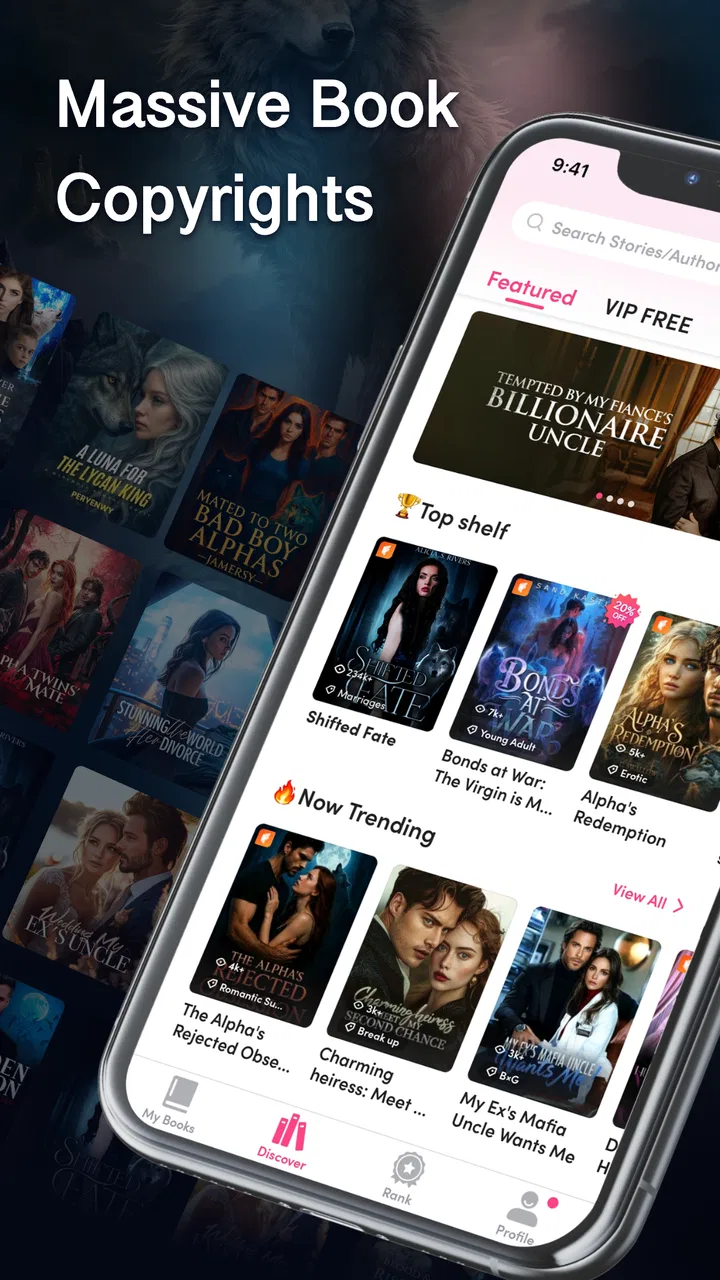
The first few sessions are driven by choice. My Fiction presents itself as a place for different kinds of fiction, so I could approach it according to my mood instead of deciding on one permanent genre. One evening I might want a dramatic story; another day I might prefer romance, mystery, fantasy, or something lighter. That flexibility is the app’s clearest early strength because it removes the pressure of finding one perfect book before reading anything.
You May Also Like

 Blood Strike: 2.5 Anniversary
Blood Strike’s Loadouts Turn Every Drop Into a Tactical Gamble
A close look at Blood Strike’s custom loadouts: how fast access to signature weapons reshapes its battle royale rhythm, rewards preparation, and narrows the gap between fights.

 Pandora - Music & Podcasts
Pandora’s Music Is Easy to Start, but Harder to Recover
Pandora’s strength is its low-effort path from a seed to a station. Its weak spot is how much confidence it asks you to place in connection, setup, and quiet recovery.

 8 Ball Pool
 Is Built on Rivalries, Rematches, and Routine
A close look at the rivalries, rematches, shared routines, and unanswered safety questions that turn a quick pool match into a persistent mobile community.

 Samsung Music
’s Quiet Strength Is Playing What You Already Own
Its reach comes less from spectacle than from dependable access to a personal library. That simplicity is both the app’s strongest retention engine and its ceiling.

 AccuWeather: Weather Radar
AccuWeather Review: A Quick, Clear Forecast for Everyday Decisions
For everyday plans, the best forecast is the one you can understand quickly. AccuWeather makes rain timing, radar, and local conditions easy to act on, with a few trade-offs.

 Hill Climb Racing
Why Hill Climb Racing Still Turns Crashes Into One More Run
A tiny car, a bumpy hill and one more upgrade: Hill Climb Racing keeps resurfacing because its simple chaos makes every near-miss feel personal.
More From Our News Desk



I also like the low barrier to entry. There is no purchase price for the app itself, and the Mature 17+ rating sets an important expectation before anyone installs it. This is not a reading environment I would casually hand to a younger reader. Adults who are comfortable with mature themes have a much clearer reason to explore it, while families looking for children’s fiction should look elsewhere.
During a first week, the best way to use the app is not to treat every title as a commitment. I would sample several stories, notice which writing styles hold my attention, and keep only a small active reading list. That approach matters because a large fiction catalog can quickly become tiring when every appealing cover creates another unfinished obligation. The app works better as a discovery tool than as a checklist of books I must complete.
A realistic example is a commute or lunch break. If I have ten minutes while waiting for an appointment, I can open the app and continue a story instead of searching through a streaming service or carrying a paperback. Later, when I have more time, I can return to the same narrative. That kind of fragmented reading is where the app makes practical sense: it turns small gaps in the day into repeatable reading moments.
There is also a useful psychological advantage to having fiction available in one place. When I finish a chapter or lose interest in a particular story, I do not need to abandon reading altogether. I can move to another genre and preserve the habit. Traditional book buying often creates a stronger sense of commitment, but it can also make a reader stop when the chosen book is not working. Here, switching is easier.
How to avoid a weak start
I would not judge the app after opening only one story. A fiction platform can feel disappointing if the first selection does not match a reader’s taste, especially when expectations are shaped by familiar commercial novels. A better test is to try a few different categories and compare how quickly each one draws you back. The goal is to find the type of story that suits your available time and attention, not merely the title with the most attractive presentation.
I would also begin with one main story and one backup. Keeping five or six active reads sounds exciting, but it creates unnecessary friction on a phone. When every session starts with deciding what to read, the browsing process replaces the reading itself. A narrow starting routine makes it easier to tell whether the app genuinely supports your habits.
Because the app includes in-app purchases ranging from $0.49 to $199.99 per item, I would pay attention to the reading flow before spending anything. The free entry point is useful for testing whether the catalog and presentation suit me, but the presence of purchases means I would not assume that every desirable part of the experience is equally accessible without additional spending. I would first establish a regular habit and only then decide whether any optional purchase offers enough value.
Why it can remain useful month after month
The long-term appeal comes from variety, not from a single standout function. Readers who enjoy one fixed genre may eventually exhaust their interest, but people who read according to mood have a better chance of returning. My Fiction can serve as a flexible reading queue: something for a quiet evening, something for a short break, and something different when a current story stops working.
That makes it particularly suitable for readers whose tastes change often. I do not always want the same emotional experience from a book, and a multi-genre app can accommodate that better than a narrowly focused collection. It is also useful for anyone trying to rebuild a reading routine after spending too much time on short-form video or social feeds. The app offers an easier transition because the phone is already in hand, but the activity is still centered on sustained fiction.
The recurring value depends on active selection. I would revisit the app with a simple monthly routine: finish or abandon stale stories, choose one new title outside my usual preference, and keep one dependable genre for low-energy days. This prevents the library from becoming a pile of half-started books. It also turns browsing into a deliberate habit rather than an endless search for novelty.
One of the less obvious trade-offs is that variety can hide inconsistency. A broad fiction service may give me more chances to find something enjoyable, but it also means the quality and style of individual stories may vary. I should not expect every title to feel equally polished or equally suited to my taste. The benefit is the ability to move on quickly; the cost is that finding the right story may take patience.
For that reason, I would recommend keeping personal notes outside the app if a story matters to me. A short note with the title, the last chapter I read, and my reaction can make returning easier, particularly when I rotate between several works. This is a small maintenance habit, but it prevents the common problem of opening a reading app and forgetting why a particular story was worth continuing.
Who gets the most lasting value
I think the strongest audience is an adult reader who wants convenient access to varied fiction and does not mind exploring unfamiliar writers or story formats. It also suits people who read in irregular bursts. Someone who reads only on weekends may appreciate having several moods available without buying a separate book for each one.
The app is less suitable for a reader who wants a carefully curated premium library, advanced organization, or a distraction-free experience above all else. If I already have a strong ebook collection and know exactly what I want to read, a conventional ebook app may be more efficient. I would also choose a dedicated reading platform when typography, detailed library management, or ownership of purchased books matters more than discovery.
Readers who dislike mature material should skip it rather than hoping the age rating will not affect their experience. The 17+ classification is not a minor detail; it changes who the app is appropriate for. Likewise, anyone uncomfortable with in-app purchasing should review the payment flow carefully and keep spending controls in place before using the app regularly.
The maintenance burden is small, but real
My Fiction does not demand the same upkeep as a large personal ebook archive, yet it still benefits from occasional housekeeping. The biggest task is managing attention. A rotating fiction service can encourage me to collect possibilities faster than I can read them. If I never remove abandoned stories or narrow my queue, the app becomes mentally noisy.
I would set a simple rule: if a story has not held my interest after a fair trial, I move on without treating that as failure. The app’s value is partly its ability to make experimentation inexpensive in terms of commitment. Forcing myself to finish everything defeats that advantage and can turn reading into homework.
There is also a financial maintenance issue. Since the app is free but includes optional purchases, I would periodically check whether I am using any paid elements intentionally or simply responding to a moment of impatience. A small purchase may feel harmless, while a repeated pattern can change the real cost of the habit. I would decide in advance what kind of access is worth paying for and avoid purchasing just to rescue a story I am not enjoying.
On the technical side, the current version is 3.2.62 and the app supports devices running Android 7.0 or later. That makes it accessible to many older Android phones, which is useful for readers who do not upgrade frequently. Still, compatibility alone does not guarantee that an older device will feel comfortable for extended reading. Screen size, battery condition, and general responsiveness can matter more than the minimum operating-system requirement.
I would also protect the reading habit from notification overload by using the phone’s own controls to limit interruptions while reading. This is not a special feature of the app, but it makes a noticeable difference. The more the session is interrupted, the more the experience starts to resemble casual browsing instead of reading. A short, protected block of time gives the stories a fairer chance.
Where fatigue begins
The first source of fatigue is choice overload. A reader may open the app intending to read and spend the entire session comparing titles. That is why I prefer selecting the next story at the end of a reading session, when I already know what mood I want for the next visit. It turns a future decision into a prepared one.
The second is uneven personal fit. Even when the app offers many genres, variety does not mean every story will match my preferred pacing, tone, or writing style. I have to accept a little trial and error. Readers who expect every recommendation to feel immediately perfect may find the process frustrating.
The third is the tension between free access and purchases. The app’s free price makes experimentation easy, but optional spending can introduce hesitation. I would rather understand the reading experience first than let a purchase decide whether the app deserves a place in my routine. This is especially important for anyone who tends to spend impulsively when a story ends at an inconvenient moment.
There is a quieter kind of fatigue too: the phone is both the reading device and the source of distractions. A paperback does not normally invite me to check messages between paragraphs. My Fiction can support a reading habit, but it cannot remove the general distractions of a smartphone. For focused readers, a dedicated ereader or a conventional book may remain the calmer choice.
The average rating is 3.4 from around 23 thousand ratings, with roughly 3.5 thousand written reviews. I read that as a sign to keep expectations measured rather than assuming the app will satisfy everyone. Its broad concept is attractive, but individual experiences can differ according to genre preference, tolerance for browsing, and comfort with the purchase model. The scale of the audience, with over a million installs, makes it easy to see why the app has visibility, but popularity does not remove the need to test it personally.
My long-term verdict
After the novelty fades, I think My Fiction: Stories & Novels earns lasting space for the right kind of reader. Its strongest quality is not that it replaces every other way of reading. It is that it lowers the effort required to find fiction for different moments. If I maintain a small reading queue, accept that some stories will not suit me, and keep purchases deliberate, the app can become a dependable part of my monthly routine.
I would recommend it to adults who enjoy genre variety, read in short sessions, and like discovering stories without buying each one upfront. It is especially useful when I want to preserve a reading habit during busy weeks. The free installation makes the decision easy, while Maple House’s continuing version line gives the app a current home on compatible Android devices.
I would skip it if I wanted a premium, highly controlled reading environment, a children’s library, or a tool built mainly around organizing books I already own. In those cases, a dedicated ebook reader, a traditional library service, or a focused genre platform would probably fit better. I would also avoid making it my only reading source if I care strongly about consistent editorial quality from title to title.
My practical recommendation is to try it for a week without buying anything, sample several genres, and judge whether it makes you read more often rather than merely browse more often. If you find yourself returning to one or two stories and opening the app during otherwise wasted moments, it has earned a place in your routine. If every visit becomes a search through possibilities, the novelty is doing more work than the reading.
In the end, this is a flexible fiction companion rather than a universal book solution. Its lasting value comes from turning variety into a habit, provided I keep the variety under control. For an adult reader who understands that trade-off, it is a worthwhile free app to explore; for everyone else, the usual alternatives may offer a cleaner and more predictable long-term experience.
FAQs for My Fiction: Stories & Novels
01What is My Fiction: Stories & Novels?
My Fiction: Stories & Novels is a mobile reading app focused on serialized fiction, romance, drama, fantasy, and other popular genres. Stories are generally divided into chapters, making them convenient to read in short sessions. The app is designed for readers who enjoy discovering new authors, following ongoing plots, and keeping a personal library of novels and stories in one place.
02Is My Fiction: Stories & Novels free to download and use?
The app can typically be downloaded without an upfront charge, but free access may not include every chapter or feature. Some stories can use a chapter-unlocking system involving coins, credits, advertisements, subscriptions, or in-app purchases. Before reading extensively, check the current pricing, payment terms, and whether any trial automatically renews through the Google Play Store or Apple App Store.
03Does My Fiction: Stories & Novels require an internet connection?
An internet connection is generally needed to browse the catalog, load new chapters, synchronize your reading progress, and access account-related features. Depending on the version and the individual title, some chapters may be available for temporary offline reading after being loaded. Offline availability should not be assumed for the entire library, especially for newly released or locked chapters.
04What types of stories and novels are available in the app?
The catalog is mainly intended for readers who enjoy popular commercial fiction, with categories that may include romance, contemporary drama, fantasy, mystery, suspense, young adult, and similar genres. Availability can change as new titles are added or removed. Because stories may contain mature themes, relationship conflicts, violence, or emotionally intense situations, users should review descriptions and age guidance before starting a title.
05Are there advertisements or in-app purchases in My Fiction: Stories & Novels?
Depending on the current edition of the app, readers may encounter advertisements and optional or necessary purchases for unlocking chapters, obtaining virtual coins, or accessing premium content. Costs and reward systems can vary between stories and regions. If the app is used by a child, parental purchase controls are recommended, and users should confirm every transaction through their device’s official payment settings.
Pros
- Large library of romance
- drama
- fantasy
- and mystery stories
- Personalized recommendations help discover new novels quickly
- You can follow stories and receive updates when chapters are added
- Simple reading interface with adjustable text and background settings
- Interactive choices make some stories feel more personalized
Cons
- Many chapters require coins or premium access to continue reading
- Frequent ads may interrupt reading
- especially for free users
- Story quality and editing can vary between different authors
- Some novels may stop updating or remain unfinished for long periods
- An internet connection may be needed for certain content and features

My Fiction: Stories & Novels
Gallery